There is a particular kind of stress reserved for official mail. The envelope sits on the counter for days — maybe weeks. You know it's from the IRS, or your insurance company, or a collections agency. You know you should open it. But the anticipation of not understanding what's inside keeps you from doing so.
This is not a personal failing. Legal and bureaucratic documents often combine technical vocabulary, formal requirements, and important details spread across several pages.
The Comprehension Gap
Dense documents make it easy to miss a deadline, payment amount, renewal clause, or required response. The problem is often presentation: readers must translate specialist language while also deciding what to do next.
What Large Language Models Actually Do
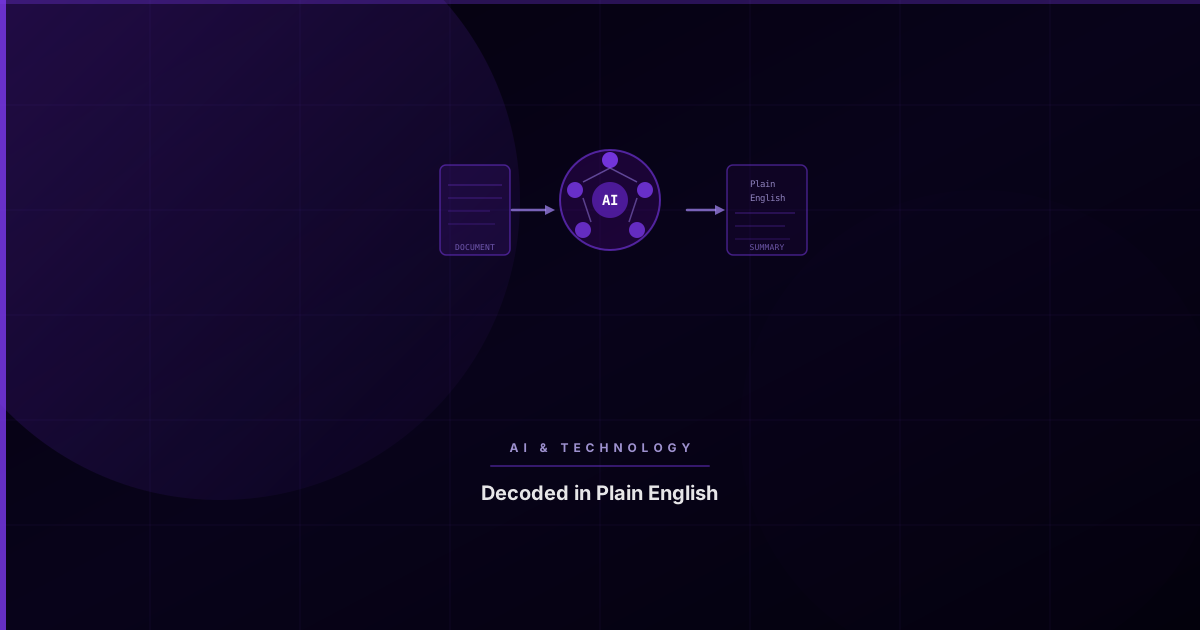
Modern language models can help translate formal language into a clearer first-pass explanation. They identify patterns in text and generate a response from the supplied document and their training; they do not understand a document in the same way a qualified professional does.
When you show a language model an IRS CP2000 notice and ask it to explain what it means, several things happen:
- Entity extraction: The model identifies key entities — dates, dollar amounts, taxpayer IDs, notice types
- Intent classification: It determines what the document is asking you to do
- Context application: It applies domain knowledge about IRS procedures to frame the explanation
- Plain-language generation: It produces an explanation calibrated for a general audience
This is more flexible than a keyword search or fixed template, but the result can still be incomplete or wrong.
What AI Gets Right
AI is most useful when the document states a date, amount, named party, or required action clearly. It can collect those details into one view and point the reader back to the relevant evidence. Accuracy varies with scan quality, document complexity, language, and how explicitly the source states the answer, so important details should always be checked against the original.
What AI Gets Wrong (And Why It Matters)
This is where we must be direct: AI is not a lawyer, and AI document analysis is not legal advice.
Specific failure modes include:
Jurisdiction-specific rules. Tenant rights differ dramatically between California and Texas. An AI trained on general legal text may not know that your state has a 21-day security deposit return window instead of 14 days.
Ambiguous language. When a lease clause could be interpreted two ways, a language model will often pick one interpretation confidently — even when a human attorney would flag the ambiguity for negotiation.
Novel situations. If your situation is unusual — a lease with custom clauses, a tax situation involving complex business structures, a dispute with unique facts — AI is less reliable.
High-stakes decisions. When a document affects legal rights, health, housing, immigration, taxes, or substantial money, verify the source and consider advice from a qualified professional.
The Right Mental Model
Think of AI document analysis the way you think of a WebMD search. If you have a headache and runny nose, WebMD helps you determine that you probably have a cold and should rest and hydrate. That's genuinely useful information.
If you have chest pain radiating to your left arm, WebMD correctly tells you to call 911. But you still call 911 — you don't treat yourself based on the website.
AI document understanding works the same way:
| Document Type | AI is helpful for | Still need a professional for | | --------------- | ----------------------------------------------- | ------------------------------ | | IRS CP2000 | Understanding what happened and your options | Responding if amount > $1,000 | | Standard lease | Understanding clauses, key dates, deposit rules | Negotiating or disputing terms | | Insurance EOB | Understanding what was covered and denied | Appealing complex denials | | Debt collection | Knowing your rights and the 30-day window | Legal advice on disputing |
Privacy: The Legitimate Concern
If you're scanning a document that contains your Social Security Number, tax ID, or detailed financial information, privacy is a legitimate concern. Here's what you should know:
- Reputable AI document tools should not permanently store your images without explicit consent
- Check each provider's retention and model-training terms; they vary by product and account type
- Look for tools that perform local redaction before sending to any cloud service
- Read the privacy policy of any tool you use — specifically for language around "training data"
PaperLens explains its current storage, retention, and service-provider practices in its privacy policy. Review those terms before uploading sensitive information.
The Net Effect
AI can make a useful first pass available to more people. It can reduce the time needed to find a clause or prepare questions for a professional, while leaving the final judgment with the reader.
That's the goal. We're not there yet. But we're closer than we've ever been.
PaperLens uses AI to explain documents in plain language and surface the details worth checking. Try it free →