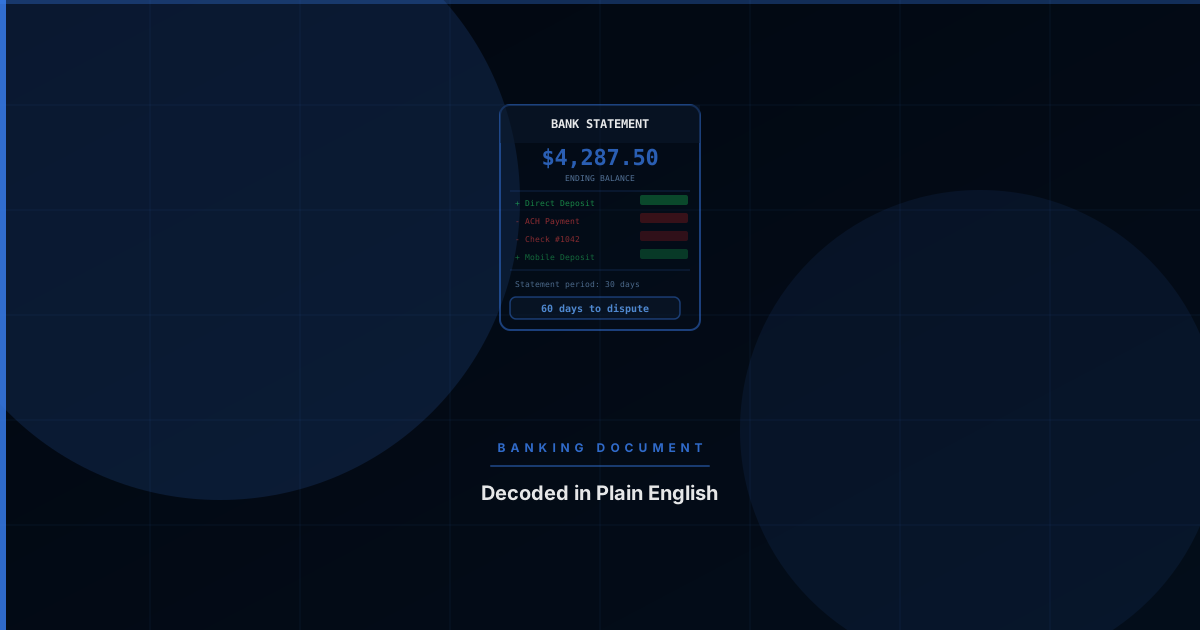
Most people glance at their bank statement, confirm the balance looks right, and move on. That's a mistake. Bank statements contain critical financial data — and errors, unauthorized transactions, and fraud can hide in plain sight if you don't know what you're looking at.
The Header: Account Identification
Every bank statement begins with account information you should verify:
- Your name and address — confirm it's current; outdated addresses can delay important mail
- Account number — partial display for security (last 4 digits typically)
- Routing number — used for ACH transactions and direct deposits
- Statement period — the start and end dates this statement covers
- Customer service number — needed for disputes
The statement period is crucial for understanding when to dispute errors. Most dispute windows are calculated from the statement date, not the transaction date.
Beginning and Ending Balance
The statement opens with:
- Beginning balance: Your account balance at the start of the statement period
- Ending balance: Your balance at the end
If you're reconciling accounts, the ending balance on one statement should match the beginning balance on the next. If it doesn't, contact your bank — this is rare but happens with system errors.
The ending balance is also what lenders and landlords often request as proof of funds. Know which month's statement they need before printing.
Transaction Types: What Every Line Means
Deposits and Credits
- Direct deposit (ACH credit): Payroll, government benefits, tax refunds. Shows the company name or a code.
- Mobile/remote deposit: Shows "mobile deposit" or "remote deposit" with a truncated check number.
- Wire transfer credit: Larger, usually same-day transfers. Often shows originating bank name.
- Interest credit: Your bank paying you interest on the account balance. Typically small.
- Deposit reversal: A deposited check that bounced — the bank removed the funds after initially crediting them. These are easy to miss.
Withdrawals and Debits
- ACH debit: Automatic bill payments, recurring subscriptions. Shows the company name and often a transaction ID.
- Debit card purchase (POS): Point-of-sale transactions. Shows merchant name, city, state.
- ATM withdrawal: Shows ATM location or bank name. Out-of-network ATMs show both the ATM fee and your bank's fee separately.
- Check payment: Shows check number and amount. The payee name may or may not appear.
- Wire transfer debit: Outgoing wire. Shows recipient name and bank.
- Bank fee: Monthly maintenance fees, overdraft fees, paper statement fees.
The Pending vs. Posted Distinction
Your statement only shows posted transactions — transactions the bank has fully processed. Your online account view may show pending transactions that haven't posted yet. Pending transactions are not on your statement and may not post in the same statement period.
How to Spot Unauthorized Transactions
Go through every transaction line by line, not just the large ones. Fraud often starts small — $1–$15 charges to test a stolen card number before larger purchases. Look for:
- Merchant names you don't recognize
- Transactions in cities you haven't visited
- Duplicate charges (same merchant, same amount, different dates)
- Charges at odd hours (middle of the night transactions on a debit card)
- Subscription charges you don't remember signing up for
- Small round-number charges from unknown companies (card testing)
If you find something suspicious, do not wait for the next statement. Report it immediately.
How to Dispute Unauthorized Transactions
Electronic Transactions (EFTA Protections)
For debit card transactions and ACH debits, you're protected by the Electronic Fund Transfer Act (EFTA):
- Report within 2 business days: Liability capped at $50
- Report between 3–60 days: Liability capped at $500
- Report after 60 days from statement: You may be liable for the full amount
The 60-day rule is the critical deadline. It runs from the date the statement containing the fraudulent transaction was sent or made available to you — not from when you discovered the fraud.
Check Forgery
For forged or altered checks, the timeline is more generous. Under the UCC, you generally have 1 year to report a forged drawer's signature, and up to 3 years for an altered check. However, your bank's deposit agreement may set shorter contractual deadlines. Review your account agreement.
How to File a Dispute
- Contact your bank immediately by phone and report the unauthorized transaction
- Follow up in writing (email or secure message through online banking) to create a paper trail
- Your bank must investigate within 10 business days (5 business days for most claims)
- If they need more time, they must provisionally credit your account within that window
- Keep records of every communication — date, time, representative name, reference number
Overdraft Fees and What They Mean
An overdraft fee means a transaction was processed when your account had insufficient funds. Your bank either:
- Paid it anyway (overdraft protection) and charged you a fee — typically $25–$35 per transaction
- Returned it (NSF — non-sufficient funds) and charged a returned item fee
Banks are required to get your opt-in consent for overdraft coverage on debit card purchases. Review whether you've opted in, and consider whether that protection is worth the fee structure.
If you're being charged overdraft fees repeatedly, it may indicate an unauthorized recurring charge draining your account.
Using Your Bank Statement for Credit Report Disputes
Bank statements are powerful evidence when disputing credit report errors. If a collection agency claims you have an unpaid debt for a service or transaction you know you paid, your bank statement showing the payment can be the documentation that resolves the dispute.
Under the Fair Credit Reporting Act, you can dispute inaccurate information with the credit bureaus (Equifax, Experian, TransUnion). A clear bank statement showing payment is often all you need to support a successful dispute.
The Simple Habit That Protects You
Review your bank statement in full every month — every single line. It takes 10 minutes. The 60-day dispute window on electronic transactions means a fraudulent charge from two months ago may already be your liability if you haven't looked.
Got a financial document you need help understanding? Upload it to PaperLens for a plain-English explanation of every charge and what it means. Scan your document →