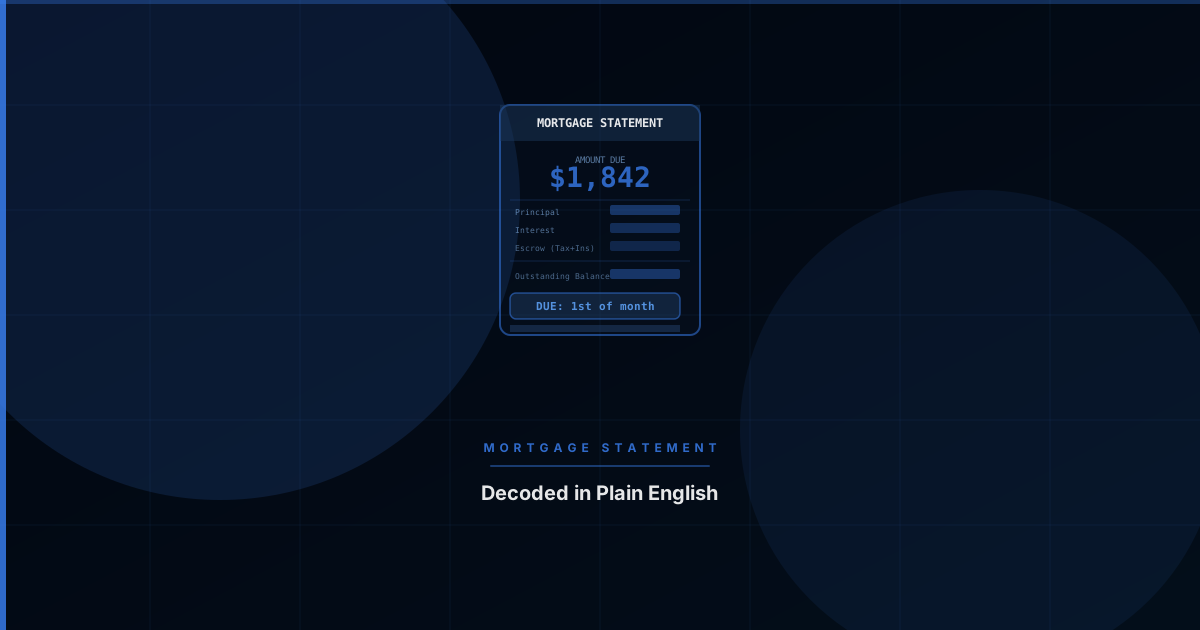
Your monthly mortgage statement is more than a bill. It's a report on the financial health of the single largest debt most people will ever carry. Understanding every section helps you catch errors, track your progress, and recognize when your lender is trying to tell you something important.
The Key Sections of a Mortgage Statement
1. Account Information
At the top of your statement you'll find:
- Loan number: Your servicer's internal reference number — always include this in any correspondence
- Property address: Verify this is correct, especially if you have multiple properties
- Maturity date: The date your loan is fully paid off under the current schedule
- Interest rate: For fixed loans, this never changes. For adjustable-rate mortgages (ARMs), this changes on the adjustment date.
2. Payment Summary
This section shows what you owe and when. It typically breaks down as:
- Principal: The amount of this payment that reduces your loan balance
- Interest: The portion paid to the lender for borrowing
- Escrow: The amount collected for property taxes and homeowner's insurance (if you have an escrow account)
- Other charges: Late fees, returned check fees, or other assessments
The number that matters: Payment Due Date and Total Amount Due. Note that the "amount due" may be different from your "regular payment" if you're behind, have been assessed fees, or if your escrow amount changed.
3. Principal Balance
This is how much you still owe on the loan — not including fees or interest that hasn't accrued yet. After years of payments, seeing this number finally decrease meaningfully is satisfying. But early in the loan, most of your payment goes to interest, not principal. This is amortization.
4. Escrow Account Balance
If you have an escrow account (most loans with less than 20% down require one; many others use them voluntarily), your lender collects a portion of your estimated annual property taxes and insurance premiums each month and pays those bills on your behalf.
Your statement shows:
- Current escrow balance
- Monthly escrow payment amount
- What bills have been paid from escrow recently
Important: Your escrow account should maintain a minimum balance (typically equal to 2 months of escrow payments) per federal RESPA rules. If the balance gets too high or too low, you'll receive an escrow analysis.
Understanding Amortization (The Simple Version)
Here's why your principal balance seems to barely move in the early years:
A $300,000 mortgage at 7% fixed for 30 years has a monthly payment of approximately $1,996. In your very first payment:
- Interest: $1,750 (7% ÷ 12 months × $300,000)
- Principal: $246
So only $246 of your first $1,996 payment actually reduces your balance. By year 15, the split is roughly even. By year 25, most of each payment is principal.
This is why making even one extra principal payment per year can shave years off your mortgage — those extra dollars go entirely to principal and reduce the outstanding balance against which future interest is calculated.
Your statement may include a payment breakdown showing this split for your current month. If you want to see the full schedule (every payment for 30 years), ask your servicer for an amortization table or use an online amortization calculator with your exact loan terms.
The Annual Escrow Analysis
Once a year, your servicer reviews your escrow account to determine whether your monthly escrow payment needs to change. They:
- Look at what property taxes and insurance actually cost over the past year
- Project what they'll cost next year (taxes tend to increase, insurance rates fluctuate)
- Adjust your monthly escrow payment accordingly
Escrow shortage: If taxes or insurance increased and your escrow balance is lower than required, you'll owe a shortage. You can:
- Pay it in a lump sum (due within 30 days of the notice)
- Have it spread over the next 12 months, added to your monthly payment
Escrow surplus: If the balance is higher than required (perhaps your insurance premium decreased), the servicer will refund the excess (typically over $50) within 30 days of the analysis.
Why your payment changes: Most homeowners are surprised when their mortgage payment suddenly increases. In most cases, it's not the loan terms changing — it's an escrow shortage or increase in taxes/insurance. Check your escrow analysis notice (mailed separately when the analysis is done) for the explanation.
How to Spot Errors on Your Statement
Mortgage servicing errors are more common than you'd think. Known problem areas:
Payment Application Errors
Your payment should be applied in the order specified by your loan documents — typically: first to past-due interest, then to current interest, then to principal, then to escrow. If you've made extra payments, verify they were applied to principal, not held in a suspense account.
Check your statement's payment history section: every payment you've made should appear, with the date received, amount, and breakdown between principal, interest, and escrow.
Red flag: A payment listed as "unapplied" or "in suspense" — this means the servicer received your money but hasn't credited it to your account.
Escrow Errors
- Insurance billed twice or for wrong coverage amount
- Tax payments made late (resulting in penalties charged to your escrow)
- Escrow analysis based on wrong tax assessment
If you think your escrow analysis is wrong, contact your servicer and request their calculation worksheets. Compare them against your actual tax bills and insurance premiums.
Force-Placed Insurance
If your homeowner's insurance lapses (even briefly), your servicer can buy insurance on your behalf — "force-placed" insurance — and charge it to your escrow. Force-placed insurance is typically 2–10x more expensive than regular homeowner's insurance and provides far less coverage.
If you see unexpected insurance charges, check whether force-placed insurance was applied and contact your servicer with proof of your existing coverage to have it removed.
Property Tax Changes
If your county reassessed your property value, your taxes changed. This affects your escrow payment. Verify any tax changes against your county tax authority's records to confirm they're accurate.
Loan Modification Notices Embedded in Statements
Sometimes your mortgage statement carries embedded notices that aren't prominently labeled. These might include:
- Notice that your ARM rate is adjusting next month
- Notice of a trial modification payment amount
- A proposed loan modification offer
- Foreclosure loss mitigation options
These are easy to miss if you only glance at the total due. If you're behind on your mortgage or have received loss mitigation materials, read every page of your statement carefully. Response deadlines for modification programs are strict, and missing them can result in foreclosure proceeding despite an active modification request.
What to Do When Something Looks Wrong
- Document it: Screenshot or photograph the statement showing the error
- Write a "Qualified Written Request" (QWR): Under federal law (RESPA), if you send a written letter to your servicer's designated address identifying an error or requesting information, they must acknowledge it within 5 business days and resolve it within 30–45 business days
- Continue paying the undisputed amount: Don't withhold payments while a dispute is pending — this can trigger late fees and damage your credit
- Escalate if needed: If the servicer doesn't respond to your QWR, file a complaint with the Consumer Financial Protection Bureau (CFPB) at consumerfinance.gov/complaint
Got a mortgage statement, escrow notice, or loan modification letter you need help understanding? Upload it to PaperLens for a plain-English explanation of what it says and what to do next. Scan your document →